44 Cases
Shane S Pak, MD
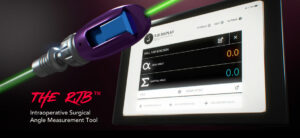
RJB Trajectory Guidance System for Pedicle Screw Insertion by Ruthless Spine
Spinal surgery frequently requires instrumentation in close proximity to critical neural and vascular structures, making accurate implant placement an essential component of safe and effective surgical treatment. Pedicle screw fixation has become a fundamental technique for achieving spinal stability and fusion; however, the three-dimensional anatomy of the spine, particularly in the thoracic and cervical regions, spinal deformity, osteoporosis, and altered anatomy following prior surgery can make accurate screw placement technically challenging. Malpositioned pedicle screws may result in cortical violation, neurologic or vascular injury, inadequate fixation, and, in some cases, the need for revision surgery. Consequently, technologies that improve intraoperative anatomic visualization and implant positioning have increasingly been incorporated into contemporary spinal surgery. [1–3]
Early comparative studies demonstrated substantially lower rates of pedicle perforation with computer-assisted navigation than with conventional screw placement, including a randomized clinical study in which pedicle perforation occurred in 4.6% of navigated screws compared with 13.4% of conventionally placed screws. [4]
The improvement in implant accuracy associated with navigation has subsequently been supported by multiple systematic reviews and meta-analyses. A prospective evidence-based review found that screws placed with CT-based navigation had substantially higher rates of complete containment within the pedicle than screws placed using freehand or fluoroscopic techniques. [5] Similarly, a meta-analysis encompassing more than 51,000 pedicle screws reported an overall accuracy rate of 95.5% for CT-based navigation, compared with 93.1% for freehand placement and 91.5% for fluoroscopy-assisted placement. [6] These findings suggest that navigation may be particularly advantageous in anatomically complex cases, where even small deviations from the intended trajectory may increase the risk of neural or vascular injury.
FDA approval of the RJB trajectory guidance for spinal pedicle screw insertion system was contingent on demonstration of accuracy and reproducibility equivalent to all currently available Traditional Spinal Navigation (TSN) systems.
Methods
A single surgeon series of patients with lumbar spinal fusion from single lumbar posterior fusion up to 8 levels of fusion performed over a 21 month period in 3 different hospitals. All patients had surgery performed as inpatient admissions to community hospitals of 300 bed capacity or less.
All cases had all screws emplaced using the RJB (v6) trajectory guidance system and Android tablets with Fluoroscopic C arm. Fluoroscopy used was a combination of Philip Zenition 30 and GE OEC 9800 Plus, depending on the hospital and the availability of the C arm for that case.
All screws placed using open technique either through a midline approach or Wiltse approach. Minimum follow up is 12 months
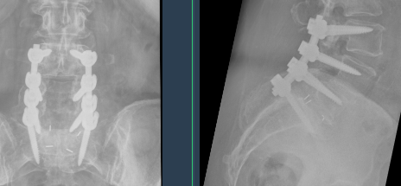
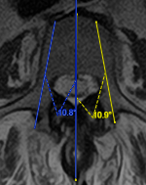
Sample case. Axial T2 MRI images show the axial angles for pedicle screw insertion at the L3 levels
Results
44 surgical cases with a total of 264 screws.
There were no takebacks or revisions for screw malplacement or neural injury due to screw malplacement after 264 screws emplaced.
| Fusion Type | Levels | Patients | Screws per Patient | Total Screws |
| Primary lumbar fusion | 1 | 21 | 4 | 84 |
| Primary lumbar fusion | 2 | 12 | 6 | 72 |
| Primary lumbar fusion | 3 | 7 | 8 | 56 |
| Revision lumbar fusion | 2 | 1 | 6 | 6 |
| Revision lumbar fusion | 4 | 1 | 10 | 10 |
| Primary lumbar fusion | 8 | 2 | 18 | 36 |
| TOTAL | 44 | 264 |
Conclusion
The RJB trajectory guidance for spinal pedicle screw insertion system is a safe and effective system for accurate placement of pedicle screws.
References
- Gelalis ID, Paschos NK, Pakos EE, et al. Accuracy of pedicle screw placement: a systematic review of prospective in vivo studies comparing free hand, fluoroscopy guidance and navigation techniques. Eur Spine J. 2012;21:247–255.
- Laine T, Lund T, Ylikoski M, Lohikoski J, Schlenzka D. Accuracy of pedicle screw insertion with and without computer assistance: a randomised controlled clinical study in 100 consecutive patients. Eur Spine J. 2000;9:235–240.
- Verma R, Krishan S, Haendlmayer K, Mohsen A. Functional outcome of computer-assisted spinal pedicle screw placement: a systematic review and meta-analysis of 23 studies including 5,992 pedicle screws. Eur Spine J. 2010;19:370–375.
- [Evidence from randomized comparative navigation study; see Ref. 2.]
- Gelalis ID, et al. Eur Spine J. 2012;21:247–255.
- Perdomo-Pantoja A, et al. Accuracy of current techniques for placement of pedicle screws in the spine: a comprehensive systematic review and meta-analysis of 51,161 screws. World Neurosurg. 2019.